The renewed Canada-US tariff war is hitting consumer confidence, mortgage rates, and GTA housing demand. Here is a data-driven look at what buyers, sellers, and investors should expect this fall.
The Trade War Is Back — And Housing Feels It
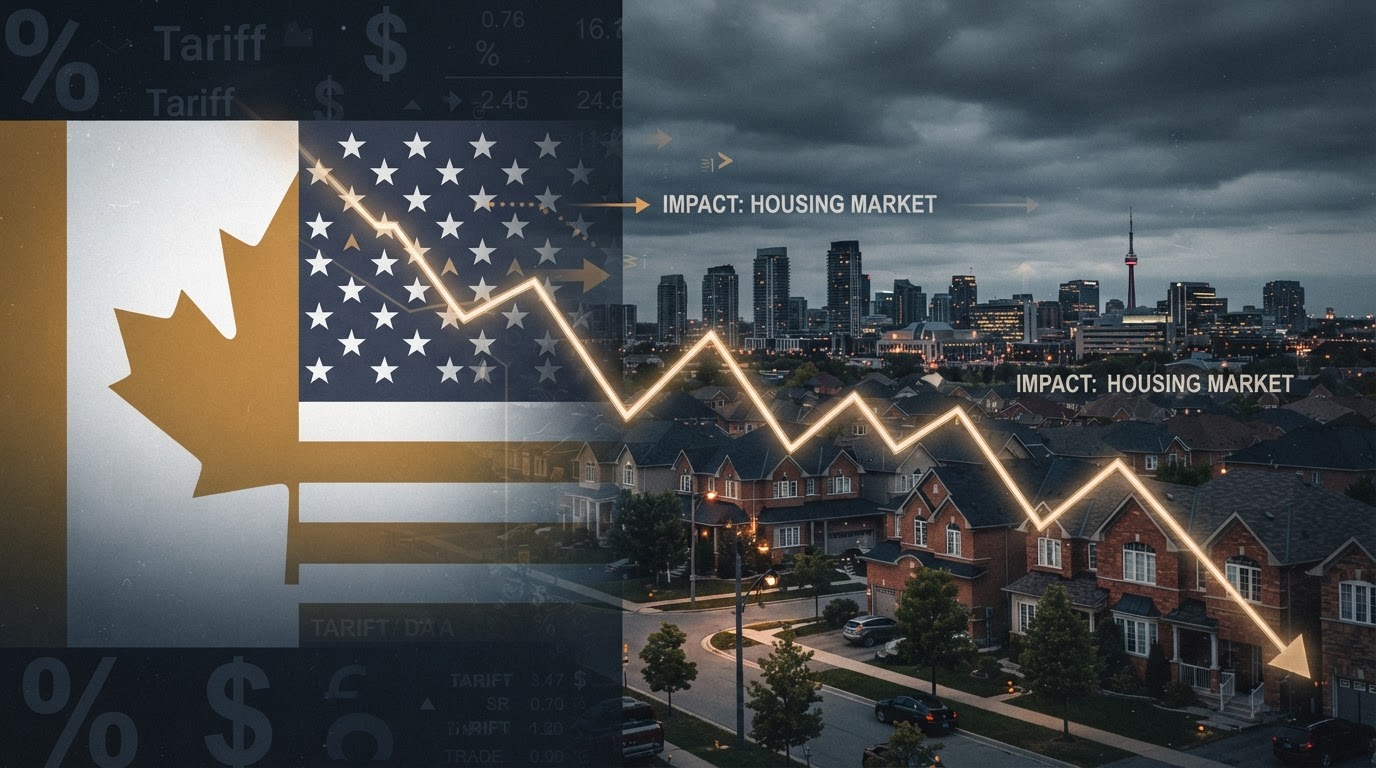
In late August 2026, US-Canada trade talks collapsed, triggering a fresh round of tariffs: roughly $20 billion in Canadian exports were hit with 50% duties, and Prime Minister Mark Carney pledged dollar-for-dollar retaliation starting September 8. For the housing market, this matters because uncertainty is the single biggest drag on buyer psychology. When trade headlines dominate the news, households delay major financial decisions — and real estate is the largest one most Canadians will ever make. The same chaos that sidelined buyers in 2025 is back, and early signals suggest it is already cooling purchase activity across the GTA.
What the Tariffs Actually Do to the Economy
Tariffs raise the cost of Canadian goods sold to the US, which pressures export-driven businesses and employment in manufacturing-heavy regions like Ontario. Sherry Cooper, Chief Economist at Dominion Lending Centres, put it plainly: this is not good for the economy, the Canadian dollar, or housing. A weaker loonie makes imported goods more expensive, feeding inflation; a softer labour market makes households more cautious about taking on mortgage debt. The net effect is a confidence shock that can suppress both listing supply (sellers wait) and buyer demand (buyers wait) at the same time.
Mortgage Rates: Why Fixed Costs Are Creeping Up
You might assume trade turbulence would push the Bank of Canada to cut rates, but the opposite is happening on the fixed side. The five-year Government of Canada bond yield — which leads five-year fixed mortgage rates — has climbed steadily over the past three months as global investors worry about US inflation, ballooning US government debt, and heavy corporate borrowing for AI infrastructure. Those higher long-term US rates spill over into Canada, nudging our fixed mortgage rates upward even as the Bank of Canada holds its overnight rate. For now, economists expect the Bank to stay on hold through the rest of 2026, with any move depending on how the economy absorbs the tariff hit.
GTA Sales Are Already Softening
The numbers tell the story. Toronto home sales fell year-over-year for the first time in five months, Vancouver sales are down nearly 10%, and the Canadian Real Estate Association has cut its 2026 national forecast again — now projecting a 1.4% decline in sales, with Ontario the only province still expected to see modest price growth. Major forecasters are converging on a flat-to-slightly-negative price picture for 2026: CREA expects a 1.1% national average price increase, RBC projects a 0.7% decline, Re/Max sees a 3.7% drop, and TD forecasts a 0.3% dip before a 2.9% rebound in 2027. Translation: prices are largely treading water while the trade situation resolves.
Brampton and Mississauga: A Closer Look
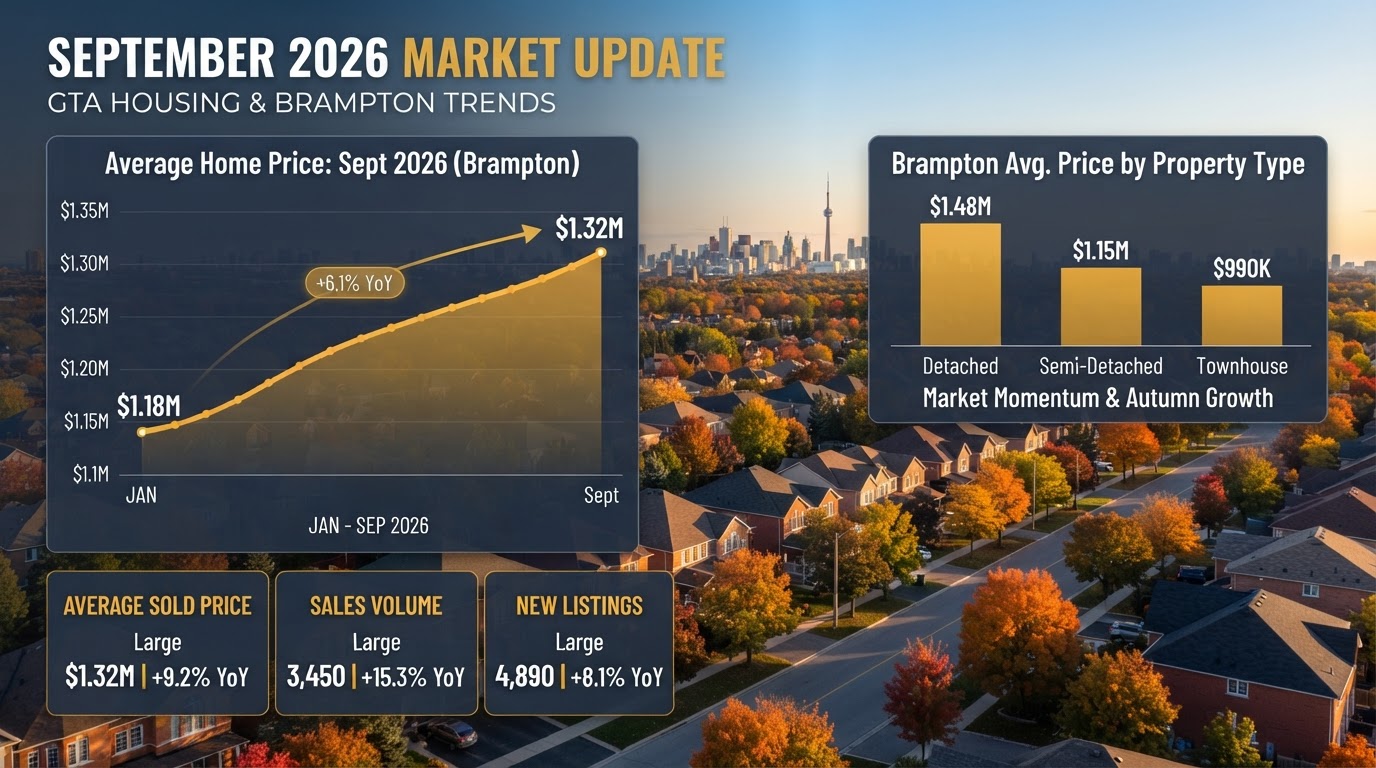
Brampton remains relatively resilient because its price point — detached homes averaging around $1.18M and townhomes near $820K — still attracts first-time buyers and move-up families who need housing regardless of headlines. Mississauga's condo segment is more exposed because it is heavily investor-driven; assignment listings and investor units keep pressure on condo prices, which have softened roughly 4% year-over-year. The trade war amplifies this divergence: end-user markets (Brampton detached) hold up better than investor-heavy segments (Mississauga condos) when confidence wobbles. If you are buying a home to live in, the fundamentals of supply and demand in your specific neighbourhood matter far more than the tariff news cycle.
Construction Costs and New Supply
Tariffs on building materials and the broader trade disruption raise construction costs, which affects new housing supply — the very thing Canada needs to ease affordability. When new builds slow, future supply tightens, which is supportive of resale prices over the medium term even if the short-term market feels soft. This is why many analysts see a potential price rebound in 2027 once the trade picture stabilizes. For buyers of pre-construction, the lesson is to scrutinize developer track records, closing timelines, and assignment risk more carefully than ever.
Should You Buy, Sell, or Wait?
Trying to perfectly time the market around a trade war is a losing game — the headlines can shift overnight. For buyers who need a home and have secure income plus a mortgage pre-approval, a soft confidence-driven market is actually an advantage: more inventory, less competition, and room to negotiate conditions like financing and inspection. For sellers, realistic pricing based on the last 30–60 days of comparable sales is essential; overpriced listings sit and absorb reductions. For investors, the trade war creates a window to acquire cash-flow properties in Brampton at prices that may look attractive once rates eventually ease and confidence returns. The worst move is paralysis — sitting out entirely often costs more in the long run than acting on solid fundamentals.
How to Protect Yourself This Fall
First, get a rate hold or pre-approval now to lock in today's fixed rates for 90–120 days while the bond market is volatile. Second, narrow your search to specific neighbourhoods and price tiers rather than reacting to national headlines — local supply and demand drive your deal. Third, insist on protective conditions in your offer; in a soft market, you have the leverage to include financing, inspection, and status certificate review. Fourth, work with an agent who brings data — comparable sales, days-on-market trends, and neighbourhood-level absorption rates — so every decision is grounded in numbers, not news noise.
The Bottom Line
The US-Canada trade war is a real headwind for the GTA housing market in late 2026, but it is not a crash trigger. Prices are largely flat, sales have softened, and mortgage rates are caught between a cautious Bank of Canada and rising global bond yields. The buyers and sellers who win in this environment are the ones who act on local data rather than national headlines. Whether you are buying your first home in Brampton, selling to move up, or building an investment portfolio, I provide every client with a customized market analysis and a clear, numbers-based action plan. Book a free consultation and let's navigate the trade-war market together.