Facing divorce, job loss, or mortgage renewal shock? A stress sale doesn't have to mean a fire sale. Here's how to sell quickly in Brampton and the GTA while protecting your equity and credit.
What Is a Stress Sale?
A stress sale happens when a homeowner needs to sell quickly due to financial hardship, personal life changes, or looming deadlines — not because they've chosen the perfect market timing. Common triggers include mortgage renewal payment shocks, job loss or relocation, divorce or separation, illness, or the threat of power of sale by a lender. The defining feature is urgency: the seller is working against a clock, and that clock can force decisions that erode equity if not handled strategically. The good news is that a stress sale does not have to become a fire sale. With the right approach, most Brampton and GTA homeowners can sell on an accelerated timeline while still capturing fair market value — and protecting their credit and future borrowing power in the process.
Why Stress Sales Are More Common in 2026
Two forces are driving an increase in stress sales across the GTA this year. First, the mortgage renewal wave: roughly 60% of outstanding Canadian mortgages renew in 2026–2027, and many households locked in at 1.5–2% rates during 2020–2021 now face renewal at 4%–4.5% — a payment increase of 20–30% or more. For families already stretched by inflation and a softening labour market, that payment shock can be the breaking point. Second, the trade-war-driven economic uncertainty has pressured employment in Ontario's manufacturing and export sectors. When income drops and mortgage costs rise simultaneously, some homeowners simply cannot bridge the gap. Understanding that you are not alone — and that options exist — is the first step toward a controlled exit rather than a forced one.
Stress Sale vs Power of Sale: Know the Difference
These terms are often confused, and the difference is worth tens of thousands of dollars. A stress sale is a voluntary, owner-initiated sale where you retain full control of pricing, timing, and the proceeds — you simply need to move faster than a typical listing. A power of sale, by contrast, is when your lender takes control of the sale after you default on the mortgage; the lender sets the price (often below market to sell fast), and any shortfall between the sale proceeds and your mortgage balance becomes a personal debt you still owe. The lesson is clear: a proactive stress sale almost always nets the homeowner more money and preserves credit far better than waiting for the lender to act. If you are falling behind on payments, selling before the lender initiates power of sale is almost always the smarter financial move.
Step 1: Know Your Numbers Before You List
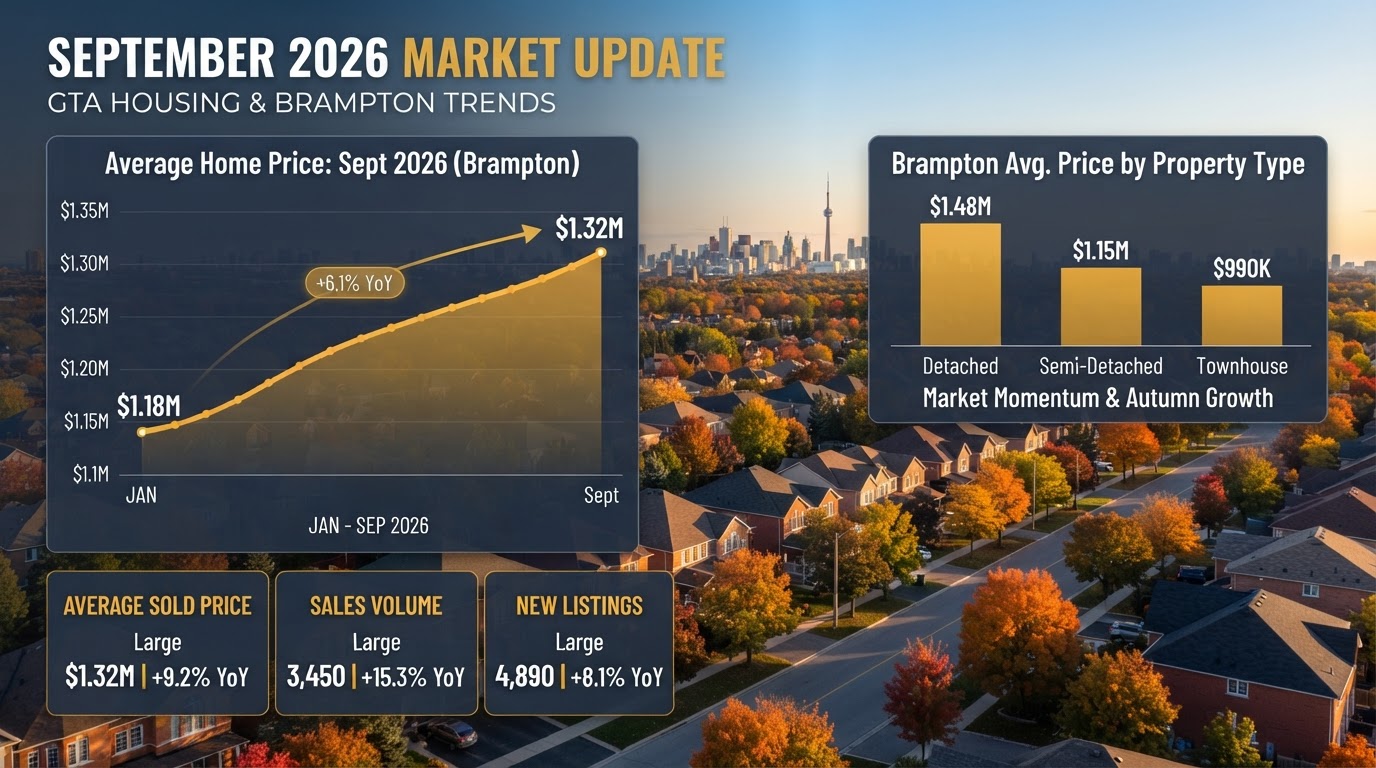
Before anything else, get clarity on three figures: your estimated home value, your outstanding mortgage balance, and your total closing costs. In Brampton, where detached homes average $1.21M and semis around $960K, most owners have meaningful equity — but equity is only real if the sale price covers the mortgage plus costs. Closing costs typically run 1.5–3% of the sale price (real estate commissions, legal fees, mortgage discharge fees, and potential prepayment penalties if you break a fixed-rate mortgage early). Request a payout statement from your lender to see the exact mortgage balance and any penalties. If your equity is thin or negative — meaning the sale won't cover what you owe — you may need lender approval for a short sale, which requires a different strategy and timeline. Knowing your numbers upfront determines every decision that follows.
Step 2: Price for Speed Without Sacrificing Value
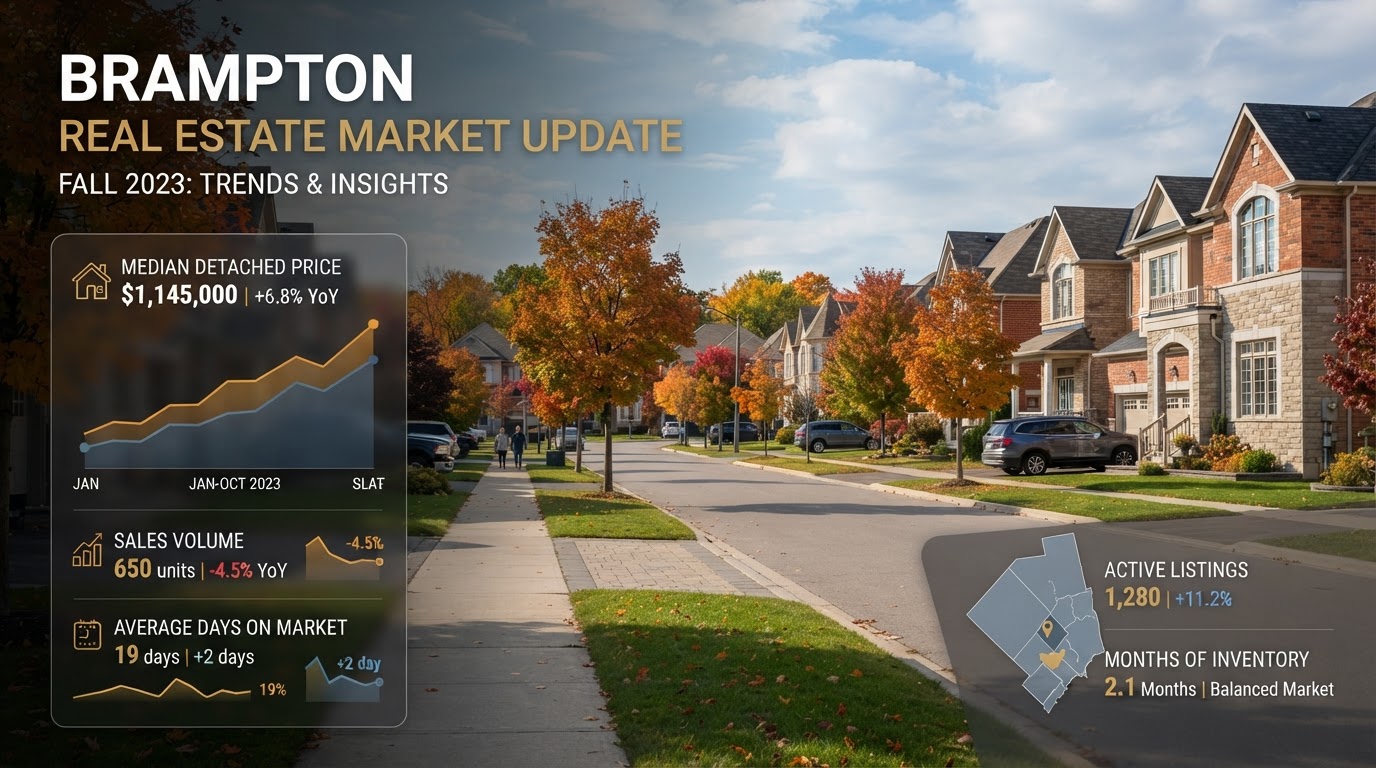
The single biggest mistake in a stress sale is overpricing. An overpriced home sits, accumulates days on market, and eventually sells for less than it would have with a strategic launch price — a costly delay you cannot afford under time pressure. The right approach is to price at or just below the most recent 30-day comparable sales in your Brampton neighbourhood. This generates maximum showings in the first two weeks, when online traffic and buyer interest peak. A well-priced home in Mount Pleasant, Credit Valley, or Heart Lake can still attract offers within 14–21 days even in a balanced market. If you need to sell in under 14 days, consider pricing 2–3% below comps to trigger immediate interest — the small price concession is almost always cheaper than carrying costs, penalty interest, and the risk of a forced power of sale.
Step 3: Prepare the Home for a Fast Sale
When time is short, focus only on high-impact, low-cost improvements. Declutter and depersonalize every room — buyers need to envision themselves in the space, and clutter shrinks perceived square footage. Complete a deep clean, including carpets and windows. Address visible deferred maintenance: leaky faucets, chipped paint, broken light fixtures, and damaged baseboards signal neglect and invite lowball offers. Invest in professional photography and a virtual tour — in 2026, the vast majority of buyers screen homes online before booking a showing, and poor photos eliminate your listing before buyers ever see it in person. If budget allows, stage the key rooms (living room, primary bedroom, kitchen). Skip major renovations; you will not recoup the cost on an accelerated timeline. The goal is a move-in-ready impression that justifies your asking price.
Step 4: Maximize Exposure to Qualified Buyers
A fast sale requires maximum reach to serious, pre-approved buyers. Your listing should appear on the MLS, Realtor.ca, and all major syndication platforms from day one. Beyond the MLS, a strong digital marketing plan — targeted social media ads, email blasts to a buyer database, and exposure to investor networks — can surface buyers who are ready to move quickly. For stress sales, investor buyers are often valuable: they purchase in cash or with firm conditions, close on flexible timelines, and do not need financing approval that could delay or collapse a deal. The trade-off is that investors typically expect a price discount of 3–8% in exchange for speed and certainty. Weigh that discount against your carrying costs and urgency — sometimes a slightly lower cash offer nets more money than a higher financed offer that takes 45 days and risks falling through.
Step 5: Evaluate Offers Strategically
In a stress sale, the highest price is not always the best offer. Evaluate every offer on four dimensions: price, conditions, closing date, and buyer financial strength. A firm, unconditional offer at $1.15M that closes in 14 days may be worth more than a conditional offer at $1.2M that requires financing approval and a 45-day close — especially if your deadline is looming. Watch for financing conditions: in a balanced market, buyers can include them, but a buyer with a full mortgage pre-approval and a sizeable deposit is far less likely to fall through. If you receive multiple offers, leverage them — but do not let a bidding war push you past your deadline. Be transparent with your agent about your timeline so they can negotiate closing dates and conditions that align with your needs, whether that is coordinating with a lender, aligning with a divorce settlement, or meeting a relocation date.
Options When Equity Is Tight or Negative
If your home's value will not cover the mortgage plus closing costs, you still have options beyond walking away. First, talk to your lender about a forbearance or payment-deferral plan — many Canadian lenders will temporarily reduce or pause payments to give you time to sell on your own terms. Second, consider a short sale (also called a compromise sale), where the lender agrees to accept less than the full mortgage balance from the sale proceeds; this requires lender approval and documentation of hardship, but it avoids a power of sale on your credit file. Third, if you have a portable mortgage, you may be able to transfer the existing low rate to a new, less expensive property rather than breaking the mortgage and paying penalties. Fourth, explore bridging options with family or private lenders to cover a short-term gap. Never simply stop paying and wait — proactive communication with your lender opens doors that silence closes.
Protecting Your Credit Through a Stress Sale
Your credit score is a long-term asset that affects your ability to rent, finance a future home, and even secure employment. A voluntary stress sale that pays off your mortgage in full has minimal negative impact on your credit — it appears as a satisfied mortgage, which is neutral to slightly positive. A power of sale, by contrast, is reported as a defaulted mortgage and can drop your score by 100–150 points, remaining on your credit file for up to seven years. A short sale falls somewhere in between, depending on how the lender reports it. The takeaway: selling proactively, even at a slightly lower price, preserves your credit and your future options. If you are already behind on payments, prioritize catching up or securing a deferral agreement before listing — every on-time payment protects your score while you navigate the sale.
The Emotional Side: Selling Under Stress
A stress sale is rarely just a financial transaction — it is often tied to divorce, illness, bereavement, or financial failure, and the emotional weight can cloud judgment. Recognize that grief and urgency can lead to rushed decisions, accepting the first low offer, or skipping protective steps like a home inspection contingency on your next purchase. Surround yourself with professionals who understand the human side: a real estate lawyer to protect your legal interests, a mortgage broker to clarify your payoff and options, and a REALTOR® who communicates clearly and respects your timeline. Set boundaries on showings if needed, and do not feel obligated to explain your circumstances to every buyer. The right professionals handle the logistics so you can focus on the decisions that matter. Selling under pressure is hard, but it is also a path to relief — a clean exit that resets your financial foundation.
Build Your Stress Sale Strategy
If you are facing a deadline — a renewal you cannot afford, a separation, a job loss, or lender pressure — the most important step is to act early. The earlier you engage a professional, the more options you retain and the more equity you preserve. I help Brampton and GTA homeowners navigate stress sales with discretion, speed, and a data-driven pricing strategy designed to protect your financial future. You will receive a clear timeline, a realistic net-proceeds estimate, and a marketing plan built for your specific situation — no pressure, just a path forward. Book a confidential consultation today and let's map out your options before the clock decides for you.